
SEND Readiness Checklist for 2026: How to Prepare for SENDIG v4.0

Introduction
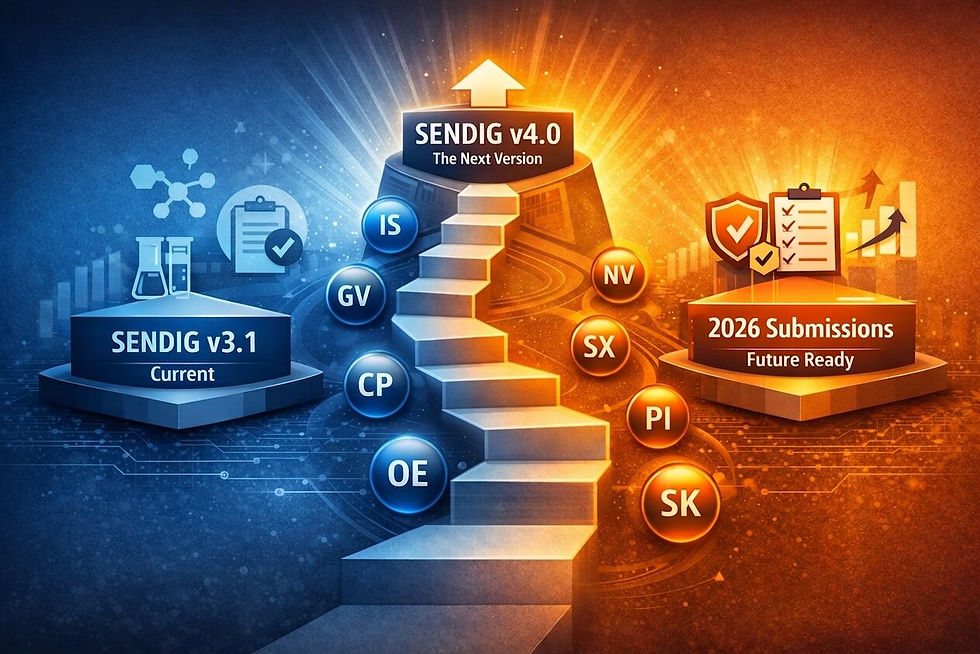
As SENDIG v4.0 continues to shape planning discussions for 2026 submissions, many sponsors and CROs are rethinking how they approach SEND readiness. The focus is no longer only on converting data at the end of a study. It is now about building a process that supports clean, traceable, and submission-ready data from the beginning.
That shift is important because SEND readiness is not just a technical task. It connects study design, source data quality, mapping decisions, validation, and documentation into one workflow that supports smoother regulatory submissions.

Why readiness matters
A strong SEND dataset depends on more than applying the standard at the end of the study. If source data, annotations, terminology, or documentation are inconsistent, the conversion process becomes more complex and the chance of avoidable issues increases, especially when common SEND readiness challenges are not addressed early.
For teams preparing 2026 submissions, early readiness planning helps reduce rework and supports greater confidence in the final package. It also helps organizations stay aligned with evolving expectations as SENDIG v4.0 adoption moves forward.
The readiness checklist
1. Confirm study feasibility early
The first step is to assess whether the study design and data capture approach can support SEND output efficiently. Early feasibility review helps identify whether any endpoints, schedules, or source data conventions may need special handling later.
This is especially important for studies with nonstandard collection patterns or complex mapping requirements. A feasibility review at the beginning is much easier than a remediation effort close to submission.
2. Strengthen source data quality
SEND readiness starts with source data quality. If the raw data is incomplete, inconsistent, or difficult to interpret, the SEND conversion process becomes more time-consuming, and the risk of correction cycles increases.
A practical review should cover study annotations, date formats, terminology, visit logic, and any study-specific conventions that may affect standardization. The cleaner the source information, the smoother the SEND process will be.
3. Map data with SENDIG v4.0 in mind
Once the study structure is understood, the next step is to map the data with the evolving standard in mind. With SENDIG v4.0, this is especially important because teams need to stay aware of how updated expectations may affect domain selection, variable usage, and supporting metadata.
This step should be handled carefully rather than mechanically. Good mapping is not only about compliance. It is also about creating a dataset that is traceable, consistent, and easy to review.
4. Prepare supporting documentation
A complete SEND package includes more than datasets. Supporting documents such as define.xml and the Study Data Reviewer’s Guide help regulators understand the structure, logic, and context of the submission.
Documentation should be developed alongside the datasets, not after them. When documentation and data are created in parallel, the final package is more consistent and easier to review.
5. Include independent validation
Independent validation adds an important quality layer before submission. It helps identify issues that may not be obvious to the team working closest to the conversion process, especially when studies are complex or timelines are tight.
A strong validation process should review not just rule-based compliance, but also traceability, interpretation, and alignment between datasets and documentation. That makes independent review valuable even when automated tools have already been used.
6. Build a realistic timeline
SEND readiness works best when it is planned as a timeline rather than handled as a last-minute task. Conversion, review, validation, issue resolution, and final packaging all take time, and each step should be mapped against the submission deadline.
A realistic schedule helps teams avoid rushed decisions and reduces the likelihood of late-stage corrections. It also creates a more predictable path from raw data to submission-ready deliverables.
Eniivance perspective
At Eniivance, SEND readiness is best treated as a structured workflow that combines feasibility, dataset development, validation, and documentation support. This approach helps sponsors and CROs maintain quality while keeping submission timelines realistic.
For teams preparing for SENDIG v4.0, a structured readiness process is especially valuable. It turns a potentially stressful submission requirement into a manageable and repeatable workflow.
Conclusion
As SENDIG v4.0 continues to influence 2026 planning, readiness has become a strategic part of nonclinical submission success. Organizations that assess feasibility early, strengthen source data quality, document carefully, and validate independently are far better positioned for smooth submissions.
The key message is simple: SEND readiness should not begin at the end of the study. It should begin when the study is being planned.


Comments